Live
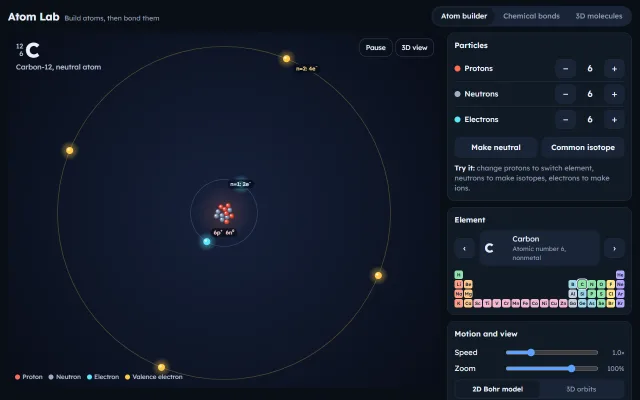
Atom Lab
Build atoms by adding protons, neutrons and electrons, and see how the element, charge and isotope change.
Class 9–10 · Class 11–12Class 9 Science: Structure of the Atom; Class 11 Chemistry: Structure of Atom
Launch simulator: Atom LabChange the parameters of the physical world and watch what happens: launch projectiles, bend light, collide carts and build fields from charges.
25 live simulators
Build atoms by adding protons, neutrons and electrons, and see how the element, charge and isotope change.
Class 9–10 · Class 11–12Class 9 Science: Structure of the Atom; Class 11 Chemistry: Structure of Atom
Launch simulator: Atom Lab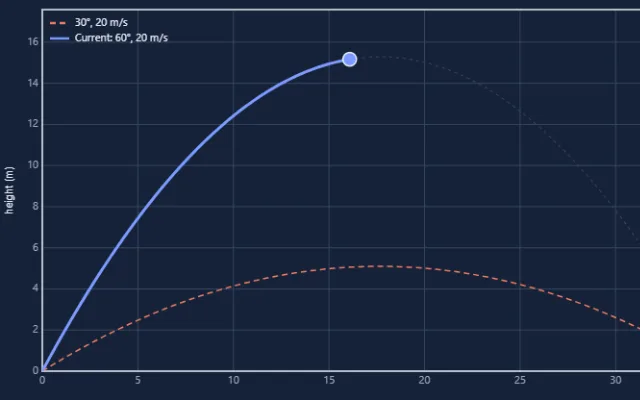
Launch a projectile, change angle, speed, gravity, height and air drag, and compare trajectories, range and flight time.
Class 11–12Class 11 Physics: Motion in a Plane
Launch simulator: Projectile Motion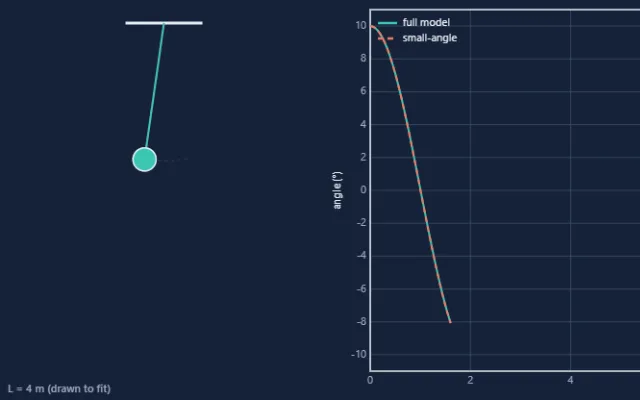
Swing a simple pendulum, change length, gravity, amplitude and damping, and compare the measured period with the small-angle formula.
Class 6–8 · Class 11–12Class 7 Science: measurement of time and motion; Class 11 Physics: Oscillations
Launch simulator: Pendulum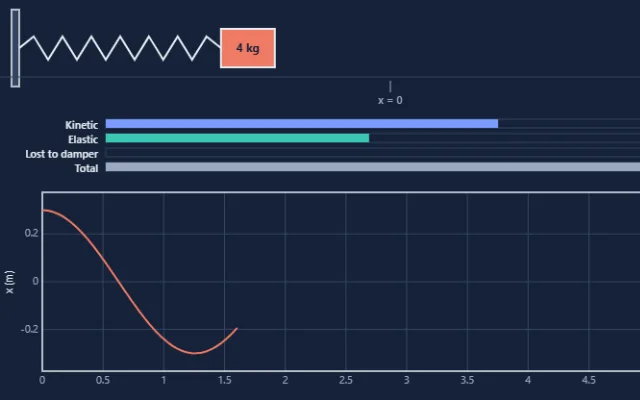
Oscillate a mass on a spring, change mass, stiffness and damping, and watch kinetic, elastic and lost energy trade places.
Class 11–12Class 11 Physics: Oscillations
Launch simulator: Spring and Mass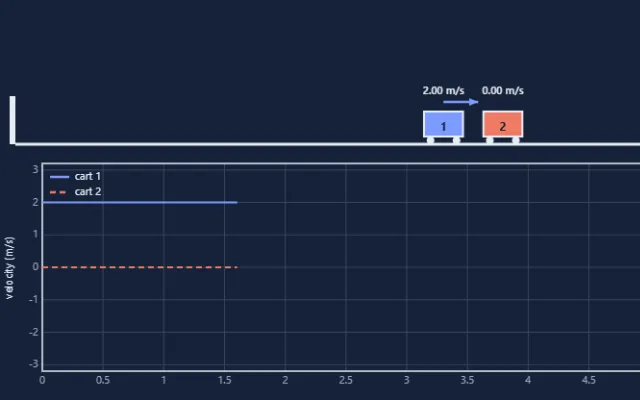
Collide two carts on a track, change their masses, velocities and restitution, and check momentum and kinetic energy before and after.
Class 9–10 · Class 11–12Class 9 Science: Force and Laws of Motion (momentum); Class 11 Physics: Work, Energy and Power
Launch simulator: Collisions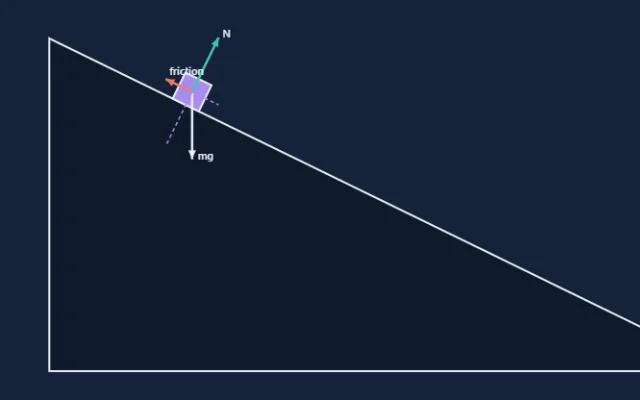
Put a block on a ramp, change slope, mass and friction, resolve the forces and predict whether it slides.
Class 11–12Class 11 Physics: Laws of Motion (friction, resolving forces)
Launch simulator: Inclined Plane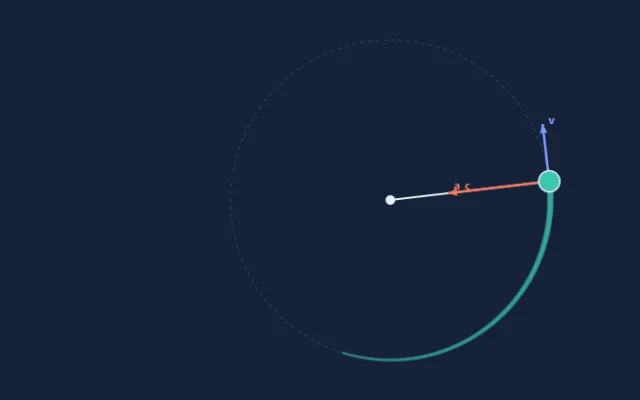
Spin an object around a circle, change radius, speed and mass, and inspect centripetal acceleration, force and what happens when the string is cut.
Class 11–12Class 11 Physics: Motion in a Plane; Laws of Motion
Launch simulator: Circular Motion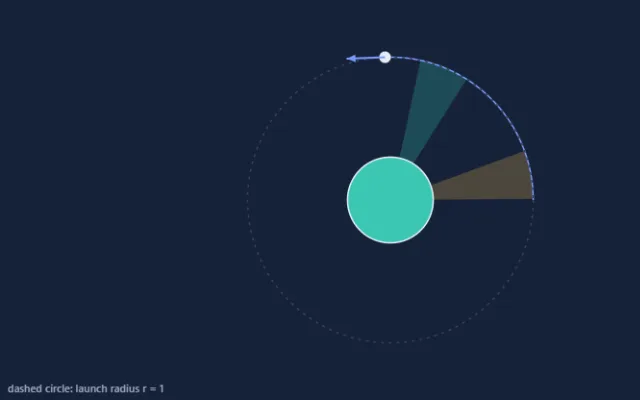
Launch a satellite around a planet, change its starting speed and direction, and compare circular, elliptical and escape trajectories.
Class 9–10 · Class 11–12Class 9 Science: Gravitation; Class 11 Physics: Gravitation
Launch simulator: Orbital Motion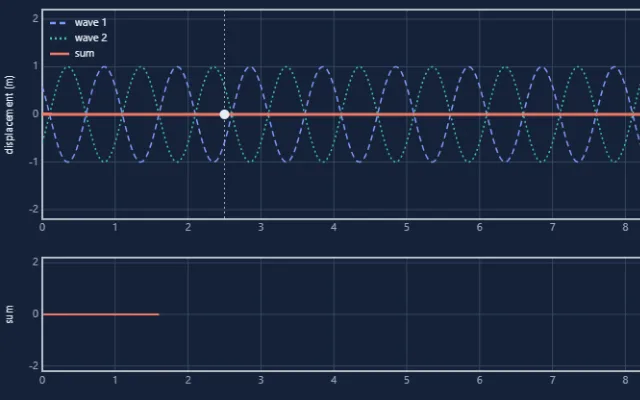
Add two travelling waves, change their amplitude, frequency and phase, and watch superposition create constructive, destructive interference and beats.
Class 11–12Class 12 Physics: Wave Optics
Launch simulator: Wave Interference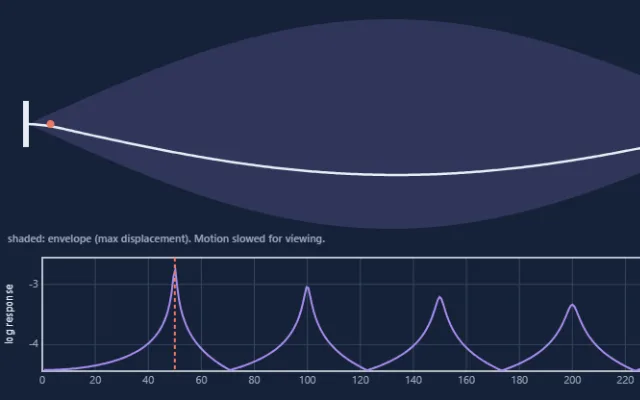
Drive a string fixed at both ends, change length, tension, density and frequency, and find the resonant harmonics.
Class 11–12Class 11 Physics: Waves
Launch simulator: Standing Waves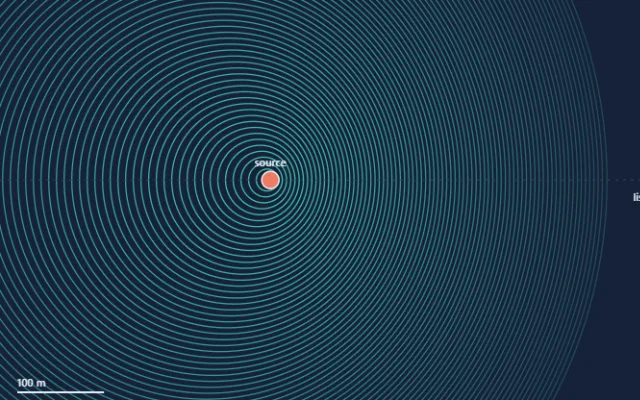
Move a sound source and a listener, watch wavefronts bunch up and spread out, and compare emitted and received frequency.
Class 11–12 · College & beyondClass 11 Physics: Waves
Launch simulator: Doppler Effect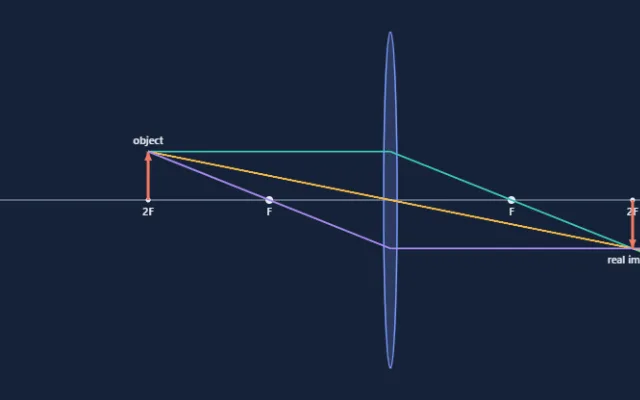
Drag an object in front of a thin lens, change the focal length, and trace the principal rays to find the image position, size and type.
Class 9–10 · Class 11–12Class 10 Science: Light – Reflection and Refraction; Class 12 Physics: Ray Optics
Launch simulator: Geometric Optics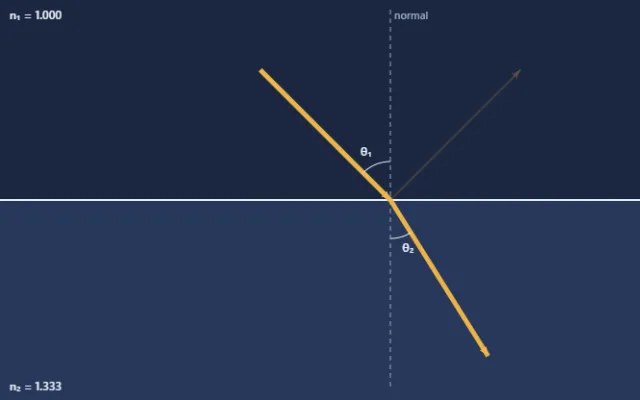
Shine a ray between two media, change refractive indices and incidence angle, and find the critical angle and total internal reflection.
Class 9–10 · Class 11–12Class 10 Science: Light – Reflection and Refraction; Class 12 Physics: Ray Optics
Launch simulator: Refraction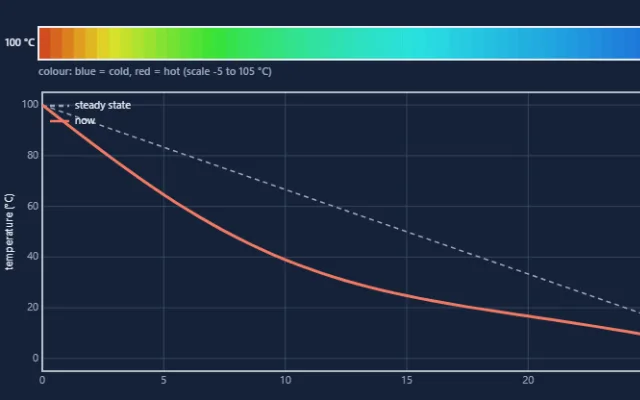
Heat a metal rod, choose the material and end temperatures, and watch the temperature profile relax towards a straight-line steady state.
Class 6–8 · Class 11–12Class 7 Science: heat and conduction; Class 11 Physics: Thermal Properties of Matter
Launch simulator: Heat Diffusion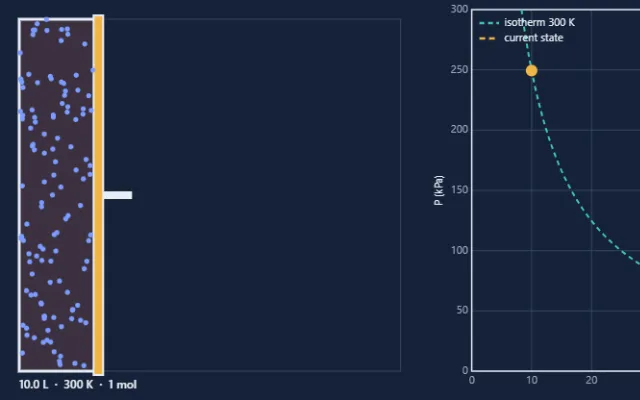
Squeeze, heat and fill a gas-filled piston, hold one quantity constant, and see Boyle's, Charles's and Gay-Lussac's laws emerge from bouncing particles.
Class 11–12Class 11 Physics: Kinetic Theory (gas laws)
Launch simulator: Gas Laws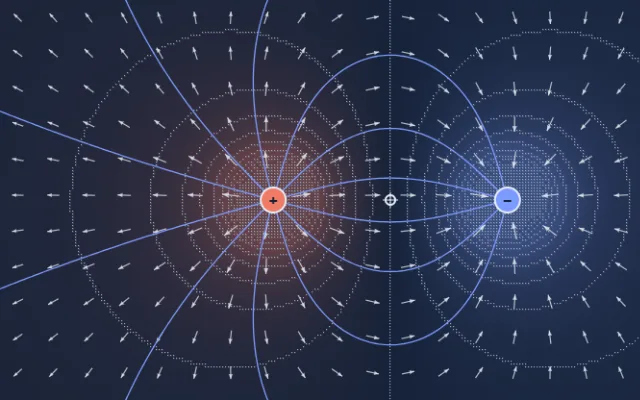
Place and drag positive and negative charges, and visualise the electric field vectors, field lines and equipotential contours they create.
Class 11–12Class 12 Physics: Electric Charges and Fields
Launch simulator: Electric Fields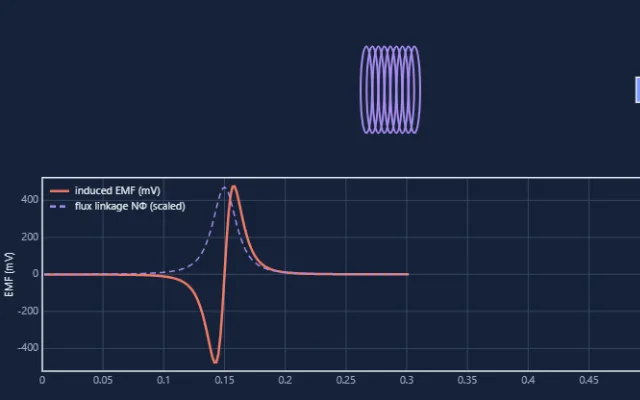
Push a bar magnet through a coil, change speed, turns and magnet strength, and connect the changing magnetic flux to the induced voltage.
Class 11–12Class 12 Physics: Electromagnetic Induction
Launch simulator: Electromagnetic Induction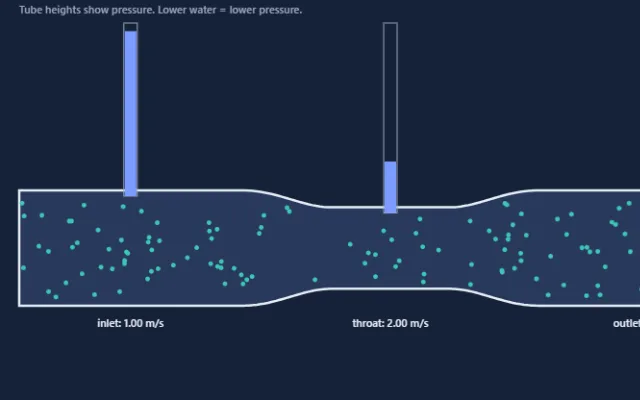
Push water through a pipe that narrows and widens, change areas and flow rate, and compare speed and idealised pressure along the pipe.
Class 11–12Class 11 Physics: Mechanical Properties of Fluids
Launch simulator: Fluid Continuity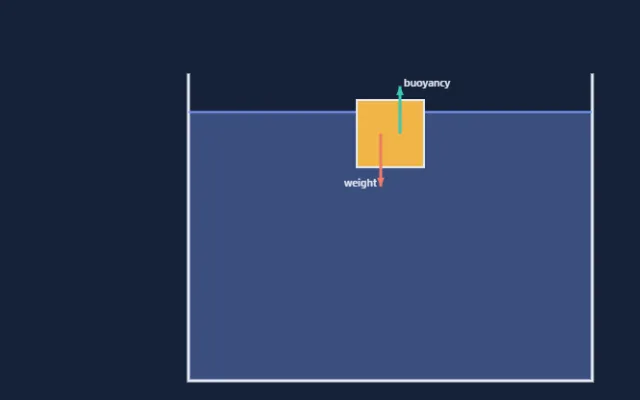
Drop blocks of different densities into different liquids, predict whether they float and how deep, and see Archimedes' principle balance the forces.
Class 9–10 · Class 11–12Class 9 Science: Gravitation (thrust, buoyancy, Archimedes' principle); Class 11 Physics: Fluids
Launch simulator: Buoyancy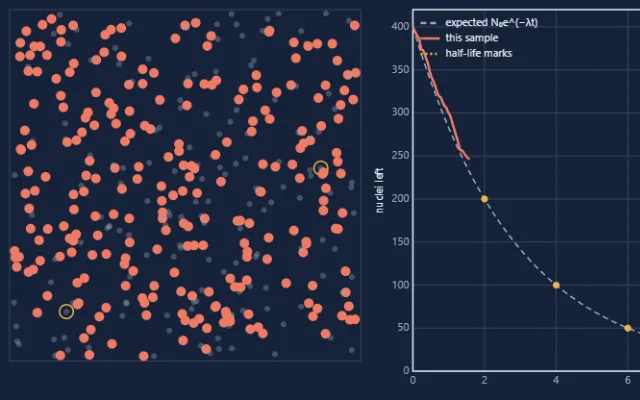
Watch a sample of unstable nuclei decay at random, change half-life and starting count, and compare the stochastic count with the exponential expectation.
Class 11–12 · College & beyondClass 12 Physics: Nuclei
Launch simulator: Radioactive Decay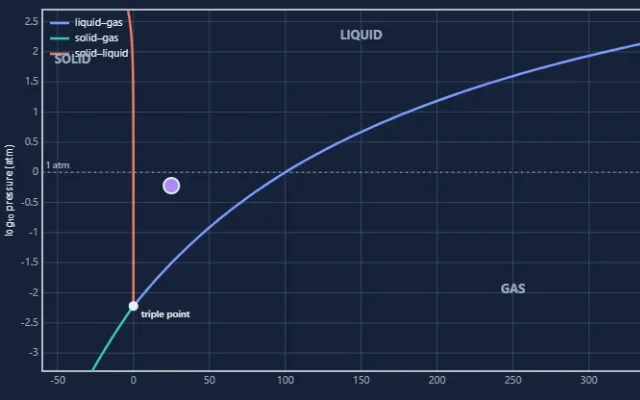
Move a sample of water or carbon dioxide around its pressure–temperature phase diagram and see where it is solid, liquid, gas or supercritical.
Class 11–12 · College & beyondExtends Class 9 states of matter; phase diagrams are college level
Launch simulator: Phase Diagram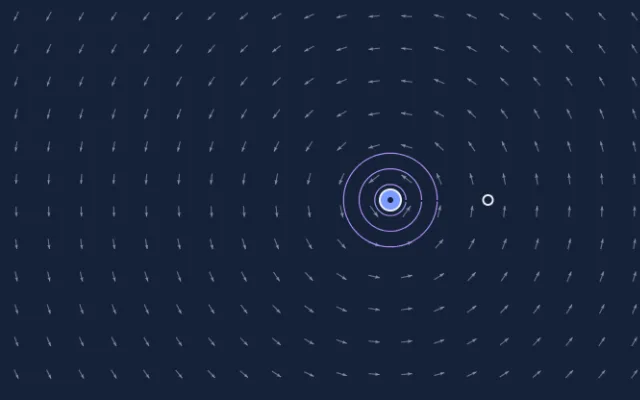
Place current-carrying wires going into and out of the page, and visualise the magnetic field lines, strength and direction they create, including coils and parallel-wire forces.
Class 9–10 · Class 11–12Class 10 Science: Magnetic Effects of Electric Current; Class 12 Physics: Moving Charges and Magnetism
Launch simulator: Magnetic Fields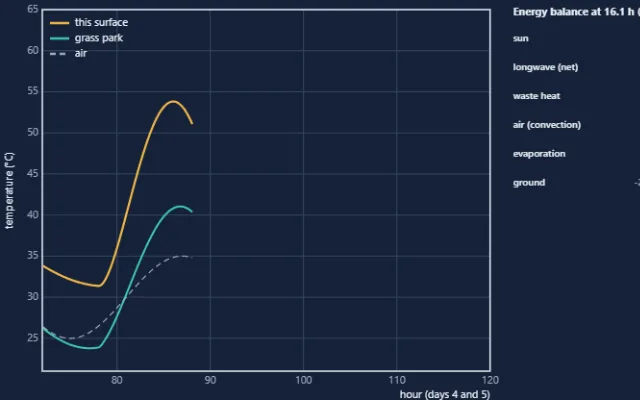
Change a city surface's colour, shade, vegetation and heat storage, and compare an illustrative surface energy balance and day–night temperatures with a grass park.
Class 11–12 · College & beyondClass 11 Geography: Solar Radiation, Heat Balance and Temperature
Launch simulator: Urban Heat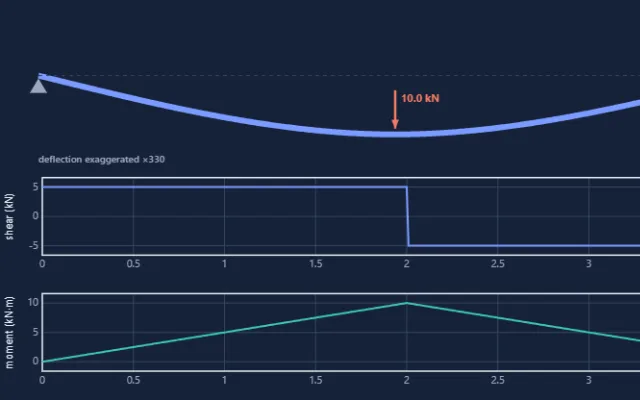
Load a simply supported or cantilever beam with point and distributed loads, change span, material and cross-section, and inspect deflection, bending moment, shear and stress in the small-deflection Euler–Bernoulli model.
College & beyondCollege structural engineering
Launch simulator: Beam Deflection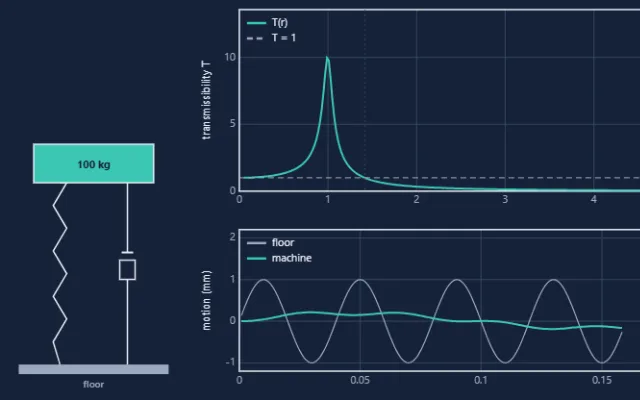
Mount a machine on springs and dampers over a shaking floor, change mass, stiffness, damping and excitation frequency, and compare transmissibility and resonance.
Class 11–12 · College & beyondClass 11 Physics: Oscillations (forced oscillations, resonance)
Launch simulator: Vibration IsolationSee the planned labs below, or pick another topic.