Home / Subjects / Biology All topics Evolution & Genetics Ecology Cells & Physiology
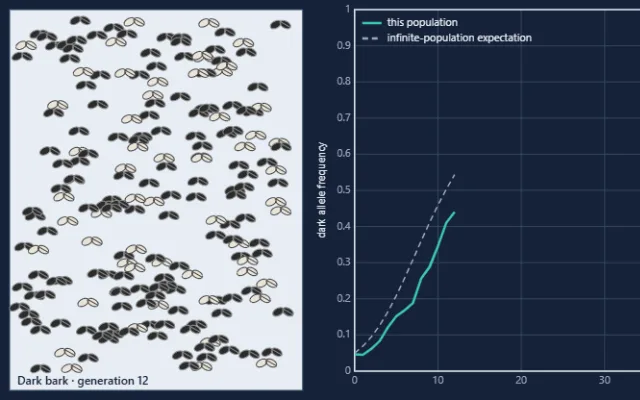
Natural Selection
Evolve a population of moths on light and dark bark, change the selection pressure and mutation rate, and track trait frequencies across generations.
Biology · Evolution & Genetics
Class 11–12 Class 12 Biology: Evolution
Launch simulator : Natural Selection
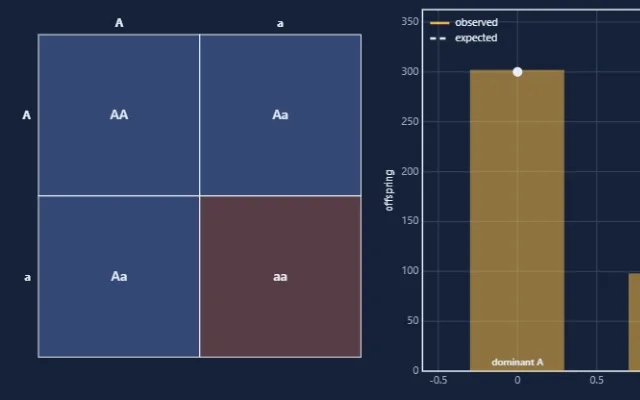
Genetic Crosses
Choose parental alleles for one or two genes, build the Punnett square, and compare expected offspring ratios with a random sample of offspring.
Biology · Evolution & Genetics
Class 9–10 · Class 11–12 Class 10 Science: Heredity; Class 12 Biology: Principles of Inheritance and Variation
Launch simulator : Genetic Crosses
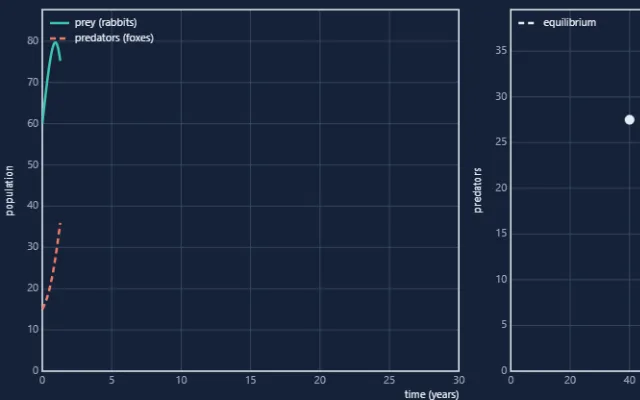
Predator and Prey
Model rabbits and foxes with the Lotka–Volterra equations, change growth and predation rates, and inspect population cycles and the phase-plane orbit.
Biology · Ecology
Class 11–12 · College & beyond Class 12 Biology: Organisms and Populations (population interactions)
Launch simulator : Predator and Prey
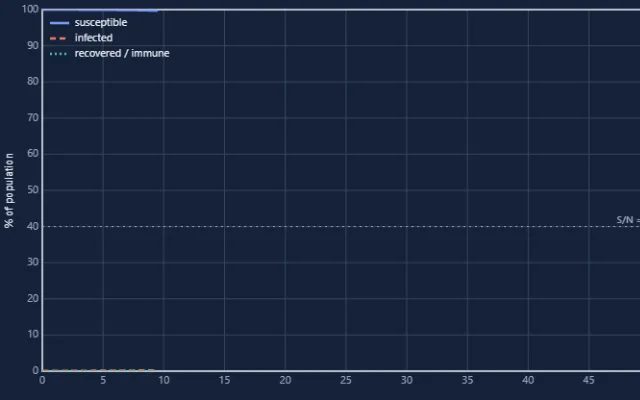
Epidemic Dynamics
Run the SIR model of an epidemic, change transmission, recovery and vaccination, and compare peak size, timing and final outbreak size.
Biology · Ecology
Class 11–12 · College & beyond Class 12 Biology: Human Health and Disease; the SIR model is college level
Launch simulator : Epidemic Dynamics
Enzyme Kinetics
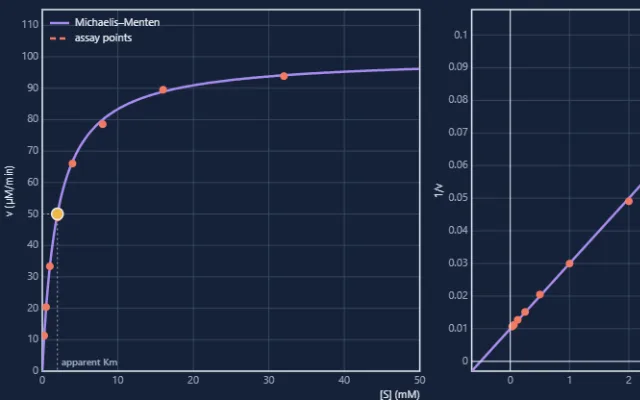
Change substrate concentration, Vmax, Km and inhibitor type, and read reaction velocity curves and Lineweaver–Burk plots.
Biology · Cells & Physiology
Class 11–12 · College & beyond Class 11 Biology: Biomolecules (enzymes)
Launch simulator : Enzyme Kinetics
Neuron Signals
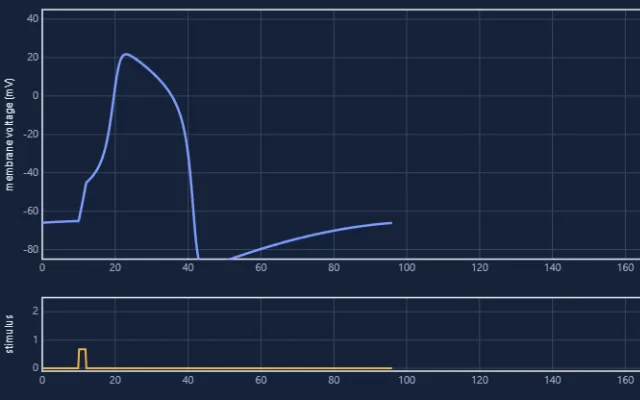
Stimulate a model neuron, change stimulus strength and membrane properties, and watch threshold, action potentials, refractory periods and firing rate.
Biology · Cells & Physiology
Class 9–10 · Class 11–12 · College & beyond Class 10 Science: Control and Coordination; Class 11 Biology: Neural Control and Coordination
Launch simulator : Neuron Signals
Osmosis
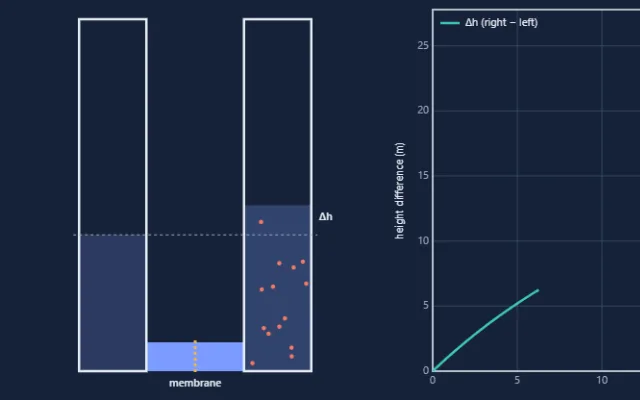
Separate two solutions with a semi-permeable membrane, change concentrations and permeability, and watch net water movement and osmotic pressure.
Biology · Cells & Physiology
Class 9–10 · Class 11–12 Class 9 Science: The Fundamental Unit of Life (osmosis); Class 12 Chemistry: Solutions (osmotic pressure)
Launch simulator : Osmosis
Photosynthesis
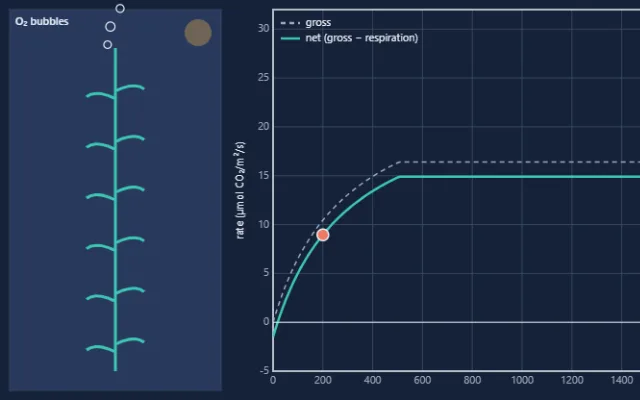
Adjust light intensity, carbon dioxide and temperature for a leaf, and explore which factor limits the rate of photosynthesis.
Biology · Cells & Physiology
Class 6–8 · Class 9–10 · Class 11–12 Class 7 Science: nutrition in plants; Class 10 Science: Life Processes; Class 11 Biology: Photosynthesis in Higher Plants
Launch simulator : Photosynthesis
Food Web
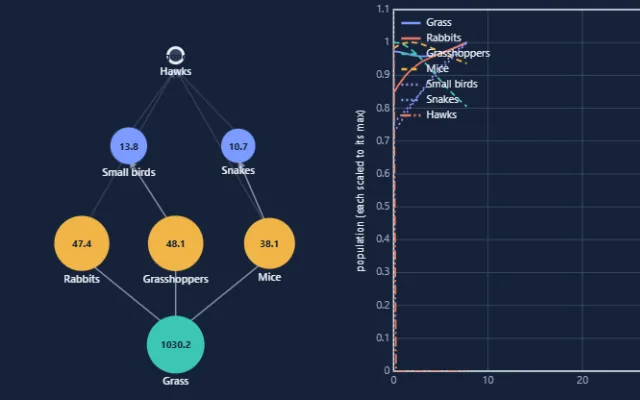
Change species populations in a small grassland food web and follow how a change in one species ripples through the others.
Biology · Ecology
Class 6–8 · Class 9–10 · Class 11–12 Class 10 Science: Our Environment (food chains and webs); Class 12 Biology: Ecosystem
Launch simulator : Food Web
Genetic Drift
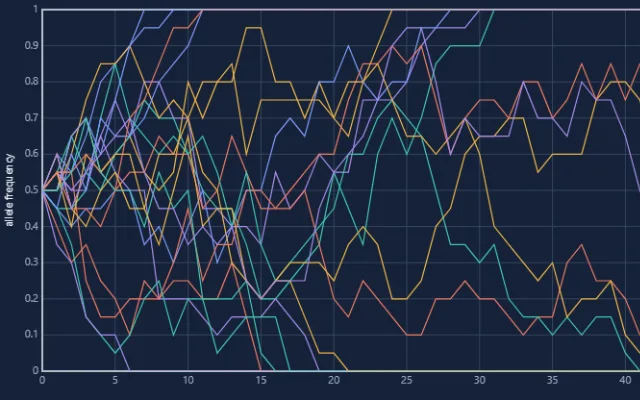
Run many populations at once under pure chance (Wright–Fisher model), change population size, and compare how fast alleles fix or vanish.
Biology · Evolution & Genetics
Class 11–12 · College & beyond Class 12 Biology: Evolution (Hardy–Weinberg, genetic drift)
Launch simulator : Genetic Drift
No live labs for this topic yet See the planned labs below, or pick another topic.
Show all topics Related subjects
Computer Science
Algorithms, data structures, system design, networks and operating systems.
Physics
Motion, waves, light, heat, electricity and atoms.
Chemistry
Reactions, equilibrium, acids and bases, electrochemistry and separation.
Mathematics
Calculus, linear algebra, probability, statistics and fractals.
Engineering
Circuits, electronics, control systems, structures and energy.
Payments & Finance
Card transaction flow, ISO 8583, payment switches and NCMC.
Operations & Economics
Queues, inventory, supply chains, scheduling and markets.
Earth & Environment
Water, climate, carbon, cities and recycling.