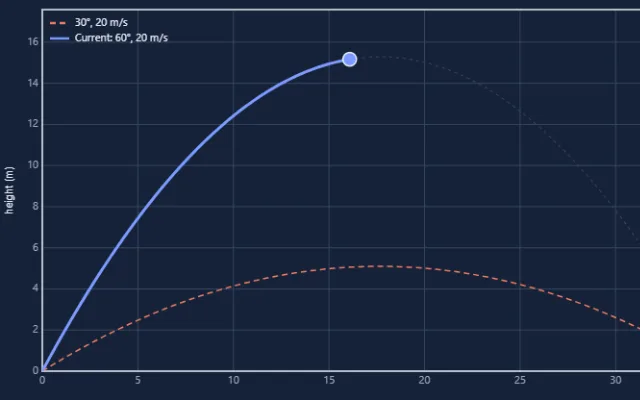
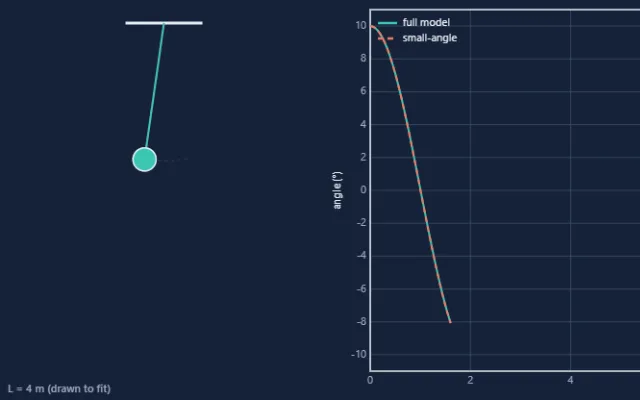
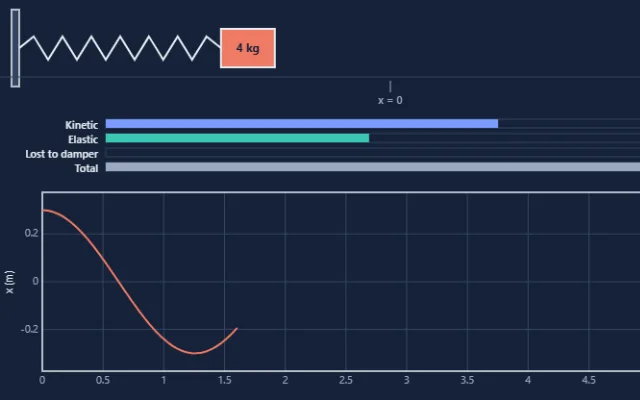
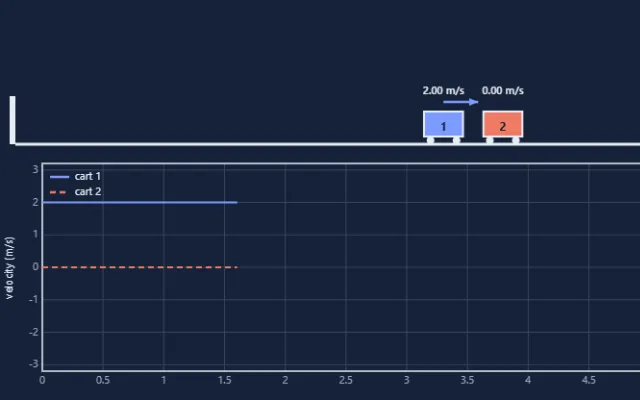
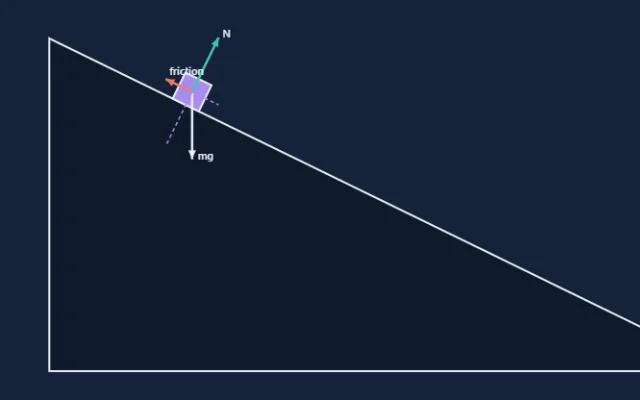
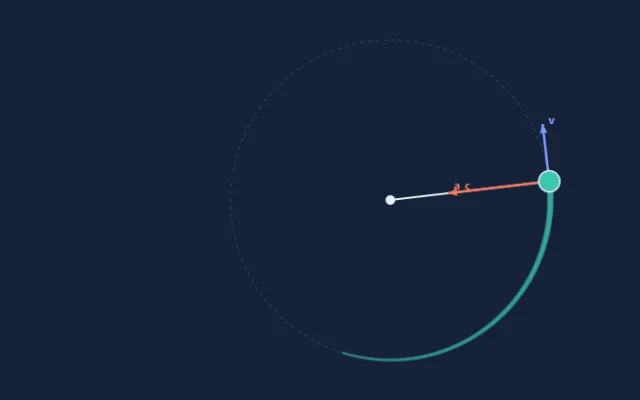
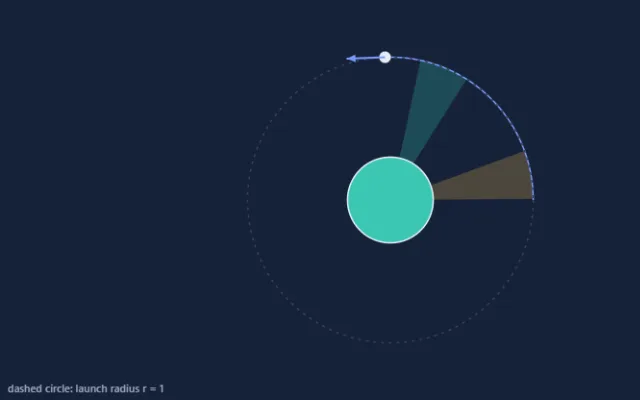
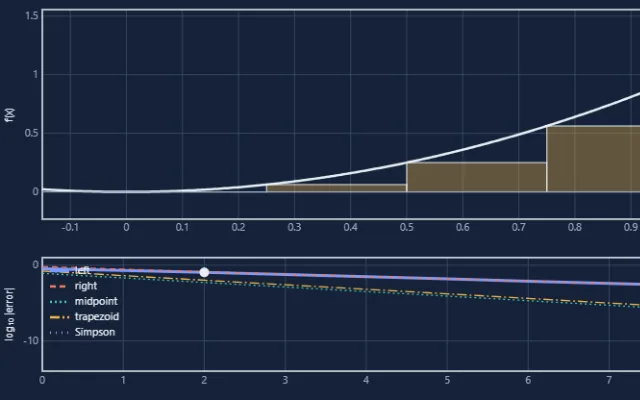
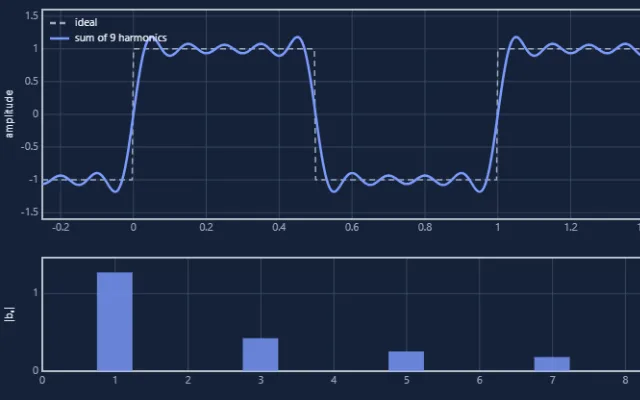
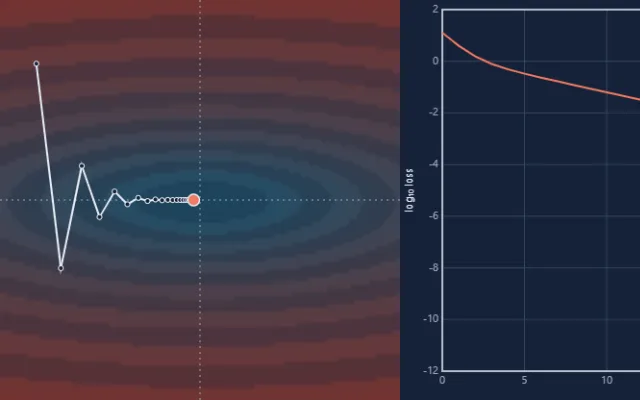
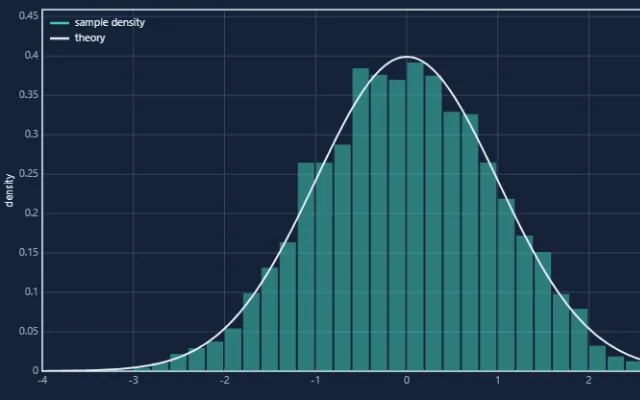
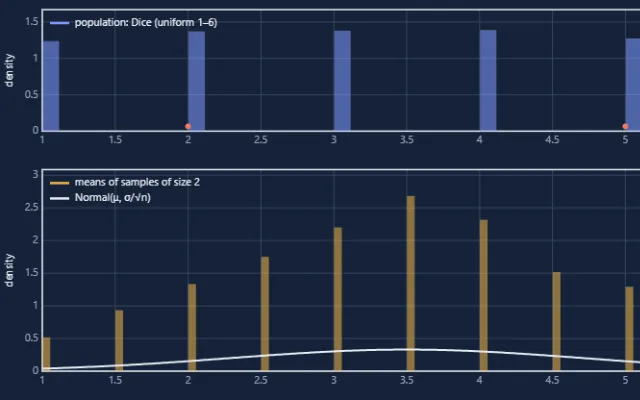
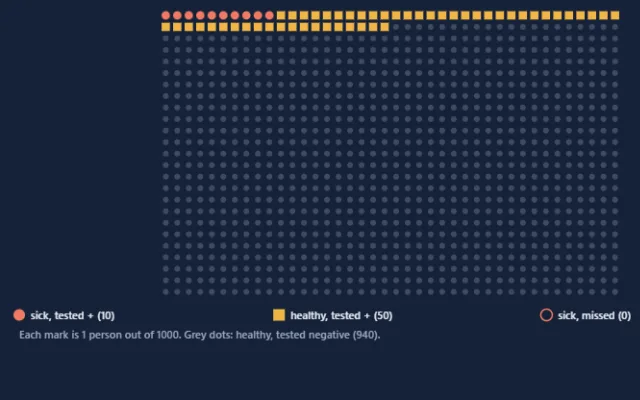
104 live simulators across 9 subjects. Search or filter by subject, class, topic or difficulty. Class matches follow CBSE/NCERT topics as a guide; check your current syllabus.
Live
Algo Simulator
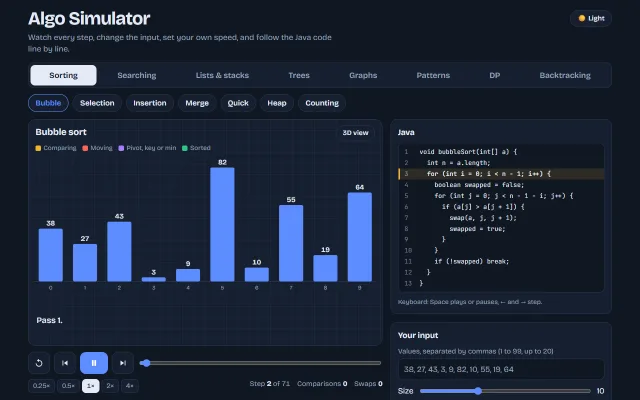
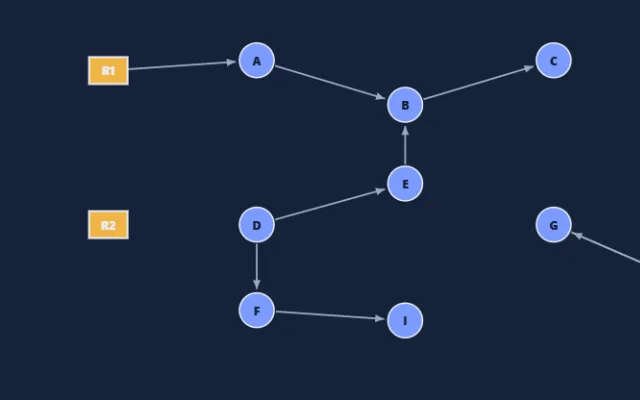
Watch sorting, searching, trees, heaps and graph algorithms run one step at a time, with animated visuals you can pause and replay.
Computer Science · Algorithms, Data Structures
Class 11–12 · College & beyondClass 11–12 Computer Science: searching, sorting and stacks
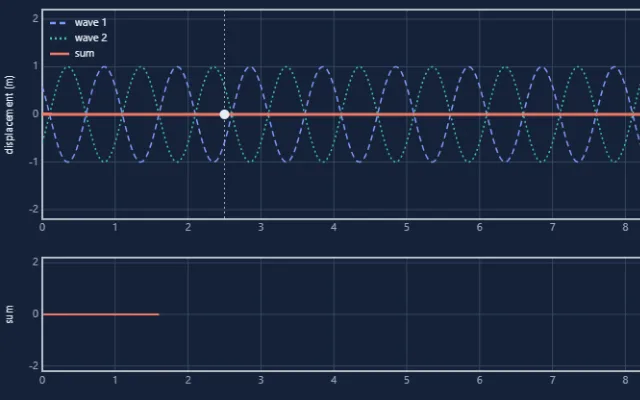
Add two travelling waves, change their amplitude, frequency and phase, and watch superposition create constructive, destructive interference and beats.
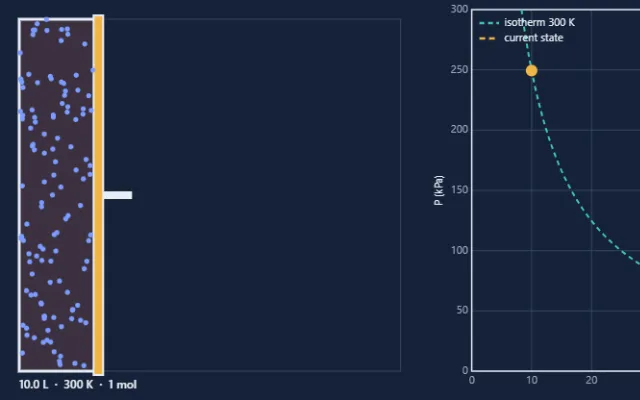
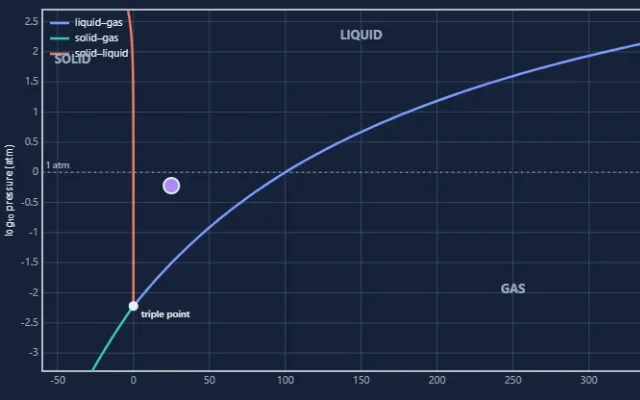
Squeeze, heat and fill a gas-filled piston, hold one quantity constant, and see Boyle's, Charles's and Gay-Lussac's laws emerge from bouncing particles.
Physics · Heat & Gases
Class 11–12Class 11 Physics: Kinetic Theory (gas laws)
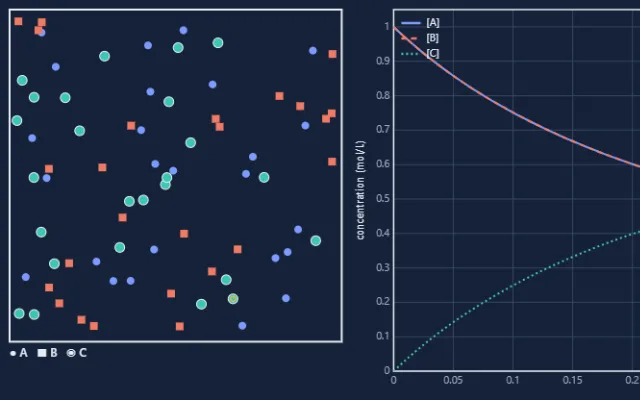
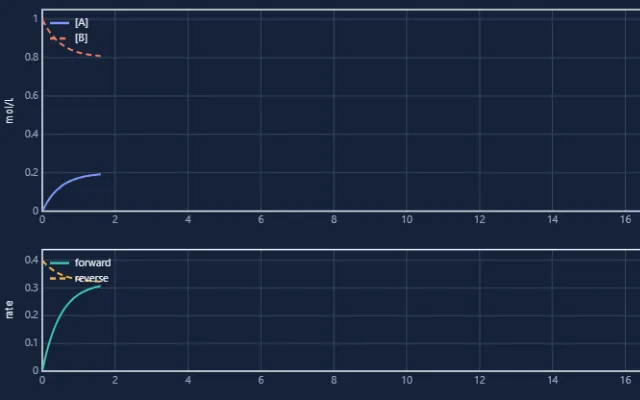
Run a reaction A + B → C, change temperature, concentration and activation energy, and compare particle collisions with the rate law and Arrhenius equation.
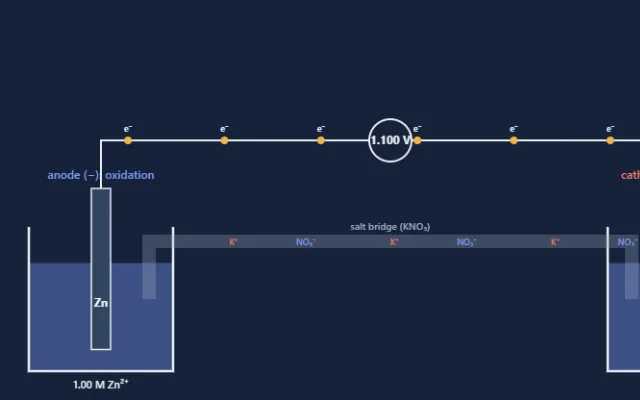
Build a galvanic cell from two half-cells, see which electrode is the anode, follow electron and ion flow, and calculate the cell voltage with the Nernst equation.
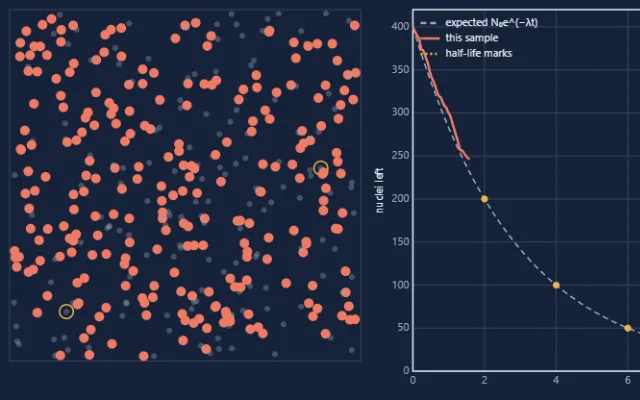
Watch a sample of unstable nuclei decay at random, change half-life and starting count, and compare the stochastic count with the exponential expectation.
Physics · Atomic & Nuclear
Class 11–12 · College & beyondClass 12 Physics: Nuclei
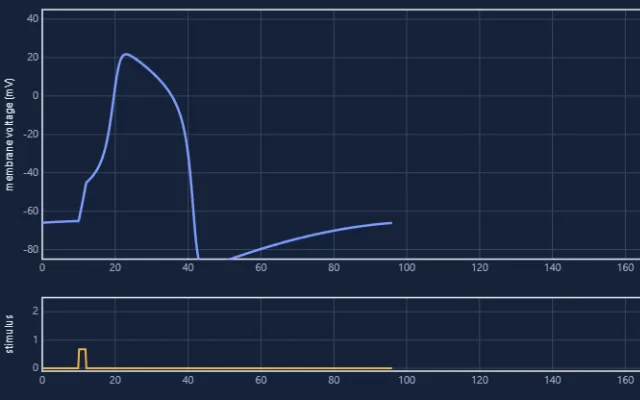
Stimulate a model neuron, change stimulus strength and membrane properties, and watch threshold, action potentials, refractory periods and firing rate.
Biology · Cells & Physiology
Class 9–10 · Class 11–12 · College & beyondClass 10 Science: Control and Coordination; Class 11 Biology: Neural Control and Coordination
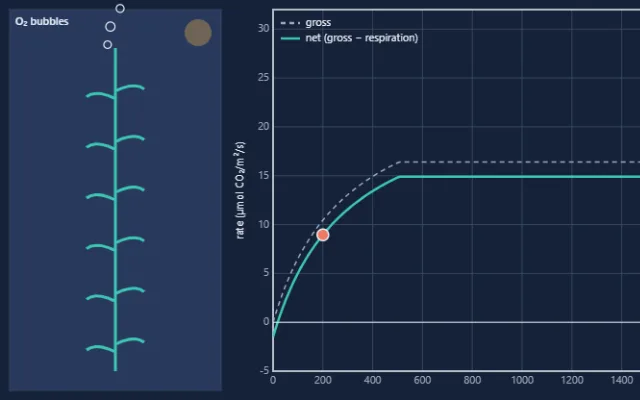
Adjust light intensity, carbon dioxide and temperature for a leaf, and explore which factor limits the rate of photosynthesis.
Biology · Cells & Physiology
Class 6–8 · Class 9–10 · Class 11–12Class 7 Science: nutrition in plants; Class 10 Science: Life Processes; Class 11 Biology: Photosynthesis in Higher Plants
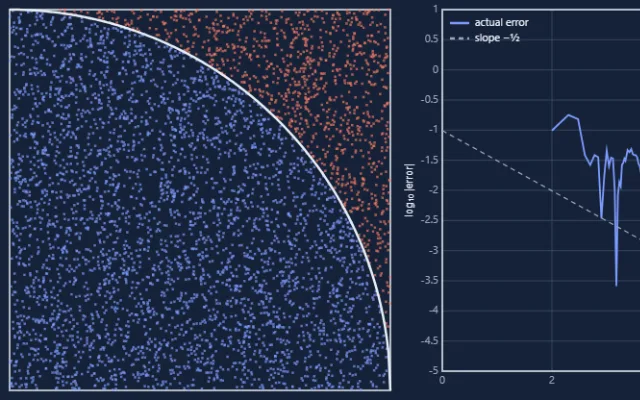
Throw random points at a square to estimate π or the area under a curve, and watch the error shrink in proportion to one over the square root of the sample count.
Mathematics · Probability & Statistics
Class 9–10 · Class 11–12Class 10 Maths: Probability (estimating π with random points)
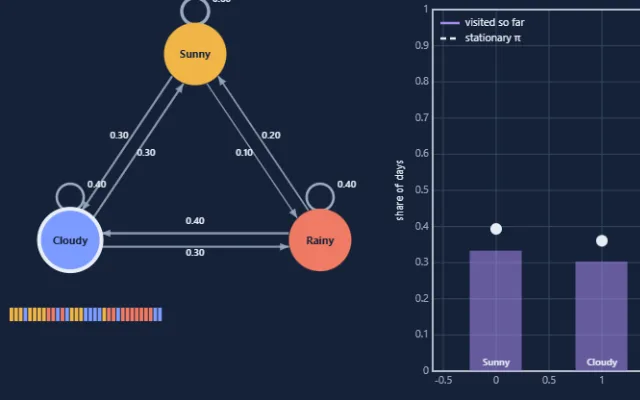
Edit transition probabilities between weather states, simulate a random walk through the chain, and compare visit frequencies with the stationary distribution.
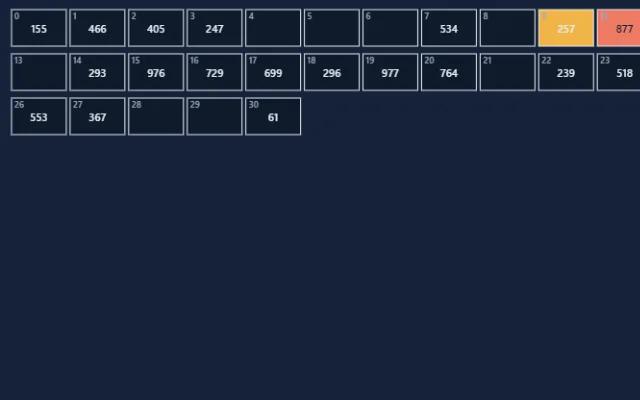
Insert keys into a hash table, compare chaining, linear probing and quadratic probing, and measure collisions, cluster lengths and probe counts as the load factor grows.
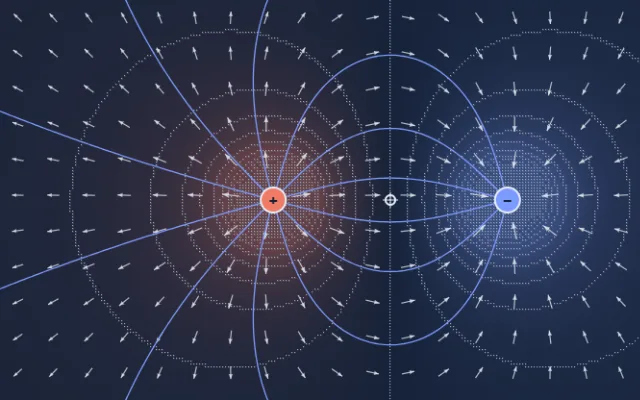
Place current-carrying wires going into and out of the page, and visualise the magnetic field lines, strength and direction they create, including coils and parallel-wire forces.
Physics · Electricity & Magnetism
Class 9–10 · Class 11–12Class 10 Science: Magnetic Effects of Electric Current; Class 12 Physics: Moving Charges and Magnetism
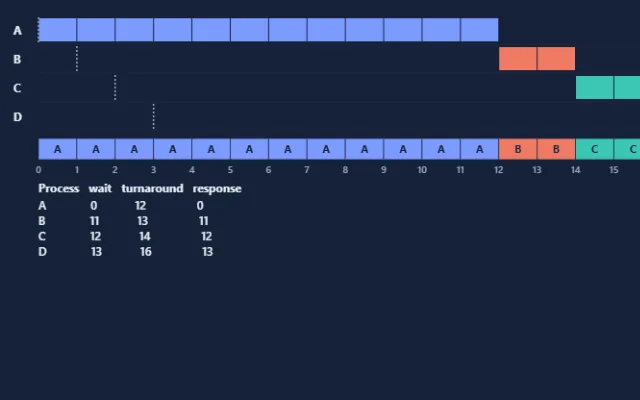
Edit process arrival and burst times, then compare FCFS, SJF, SRTF, priority and round-robin schedules on a Gantt chart with waiting and turnaround times.
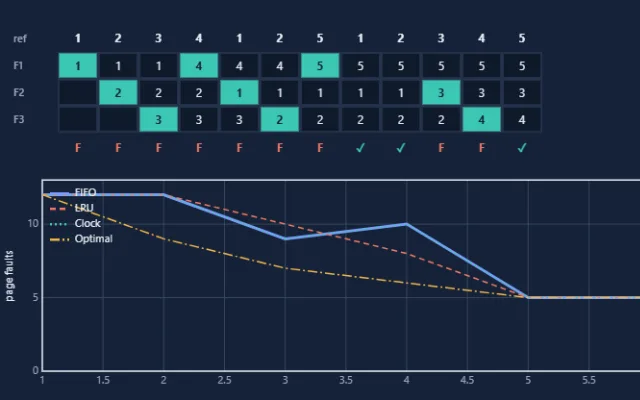
Feed a page reference string through FIFO, LRU, Optimal and Clock replacement, change the number of frames, and compare page faults including Bélády's anomaly.
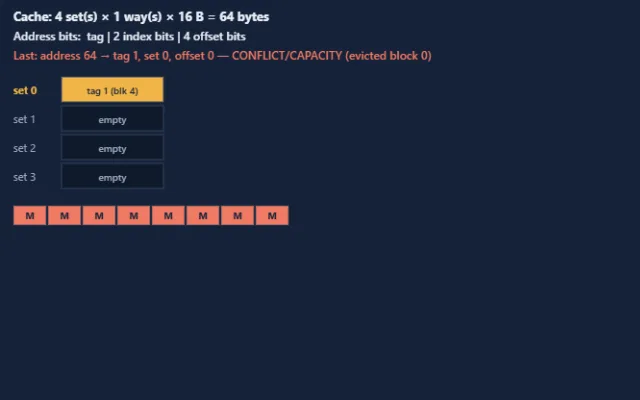
Send memory addresses through direct-mapped, set-associative and fully associative caches, see tag, index and offset bits, and compare hit rates and conflict misses.
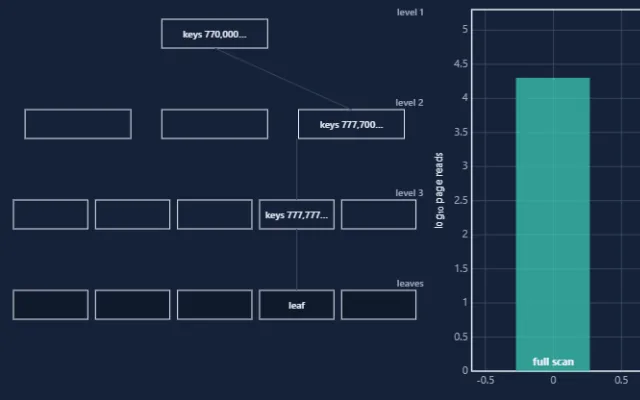
Compare a full table scan with a B-tree index lookup on generated data, change table size and query selectivity, and count the rows and pages each one touches.
Computer Science · System Design, Data Structures
Class 11–12 · College & beyondClass 12 Computer Science: Database Concepts and SQL
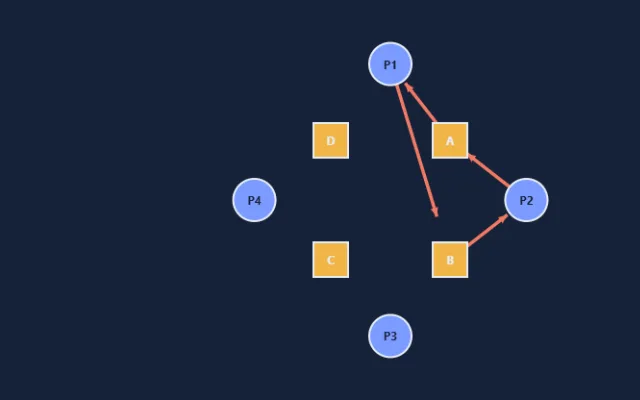
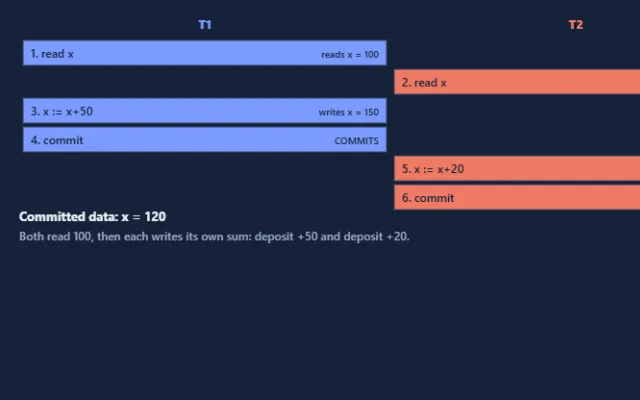
Interleave two database transactions step by step under different isolation levels and watch dirty reads, non-repeatable reads, lost updates and write skew appear or get blocked.
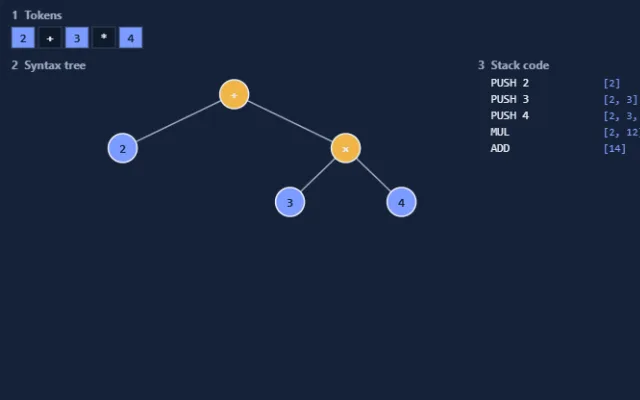
Type an arithmetic expression and follow it through tokenising, parsing into a syntax tree, stack-machine code generation and evaluation, with clear error messages.
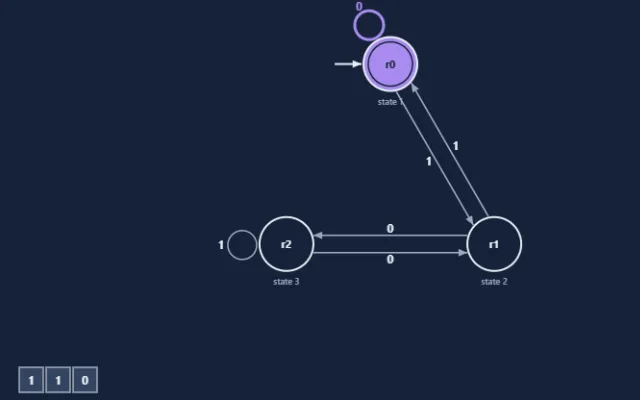
Step a deterministic finite automaton through an input string, edit its transitions, and see which strings it accepts, from binary divisibility to turnstiles.
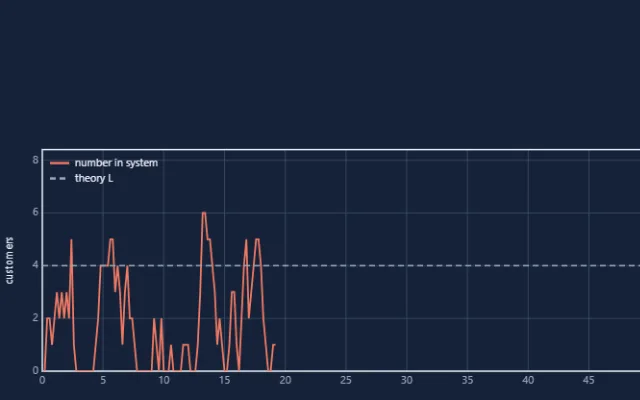
Simulate customers arriving at random and being served by one or more servers, change arrival and service rates, and compare queue length and waiting time with M/M/c theory.
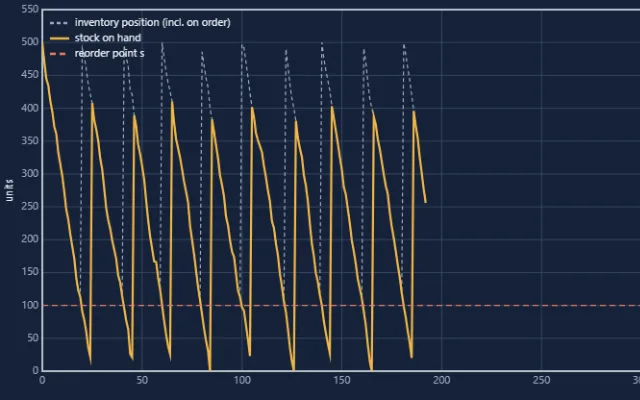
Run a shop's stock day by day with random demand, set the reorder point, order quantity and lead time, and compare stockouts, holding cost and ordering cost.
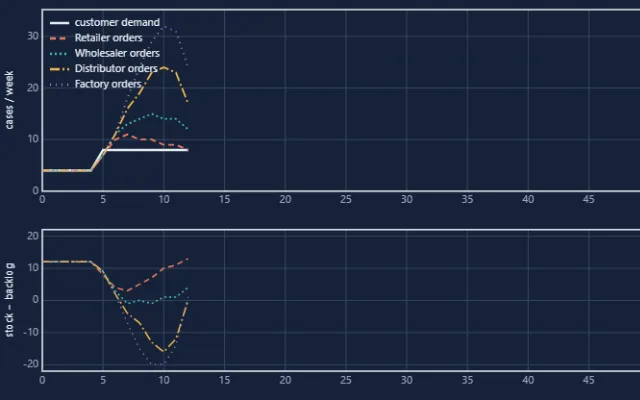
Run a four-stage retailer–wholesaler–distributor–factory chain, change demand and delays, and watch small changes in consumer demand amplify into the bullwhip effect.
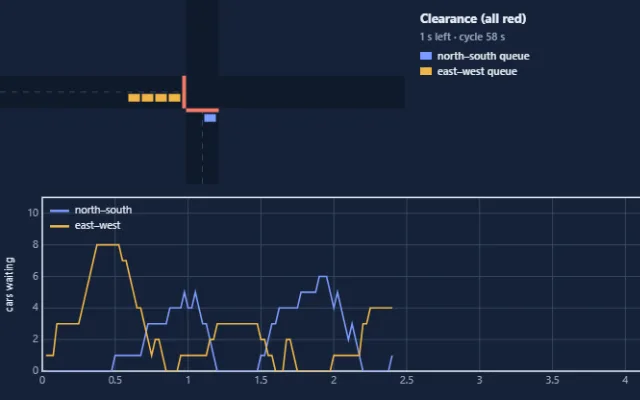
Time a fixed-cycle traffic signal at a two-phase junction, change green times and arrival rates, and compare measured queues and delay with Webster's formula.
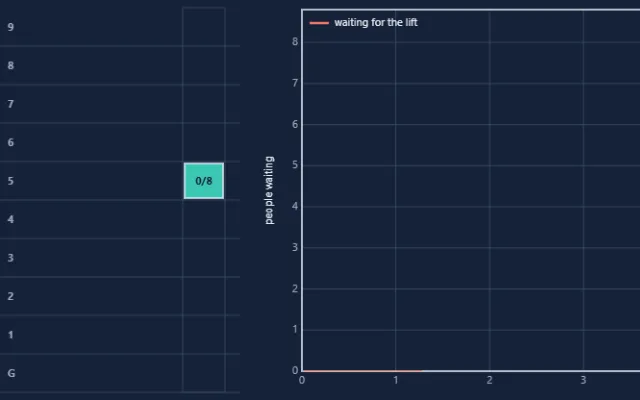
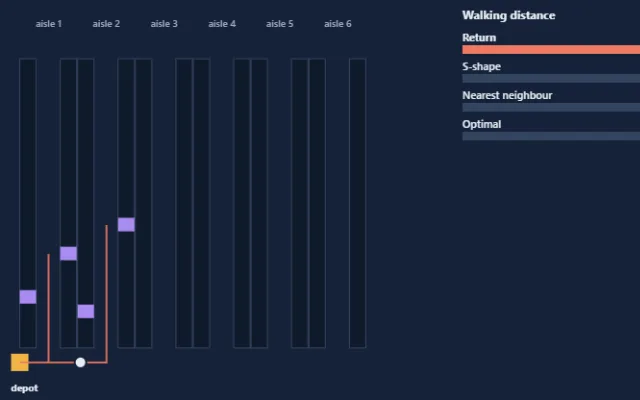
Run one lift in a ten-floor building, add calls by clicking floors, and compare first-come-first-served, nearest-stop-first and the classic sweep (elevator) algorithm on waiting time and fairness.
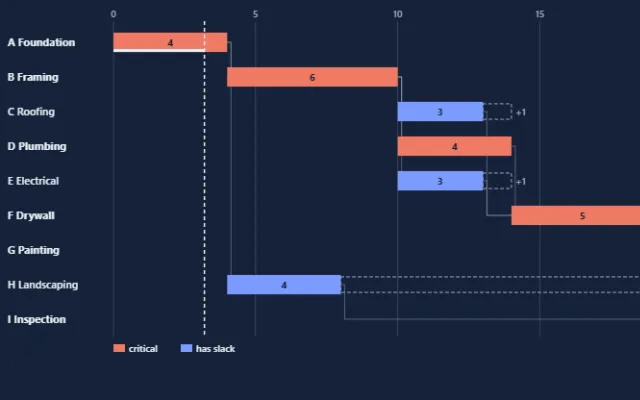
Edit task durations and dependencies in a small building project, and watch the critical path method find the project length, the critical path and every task's slack.
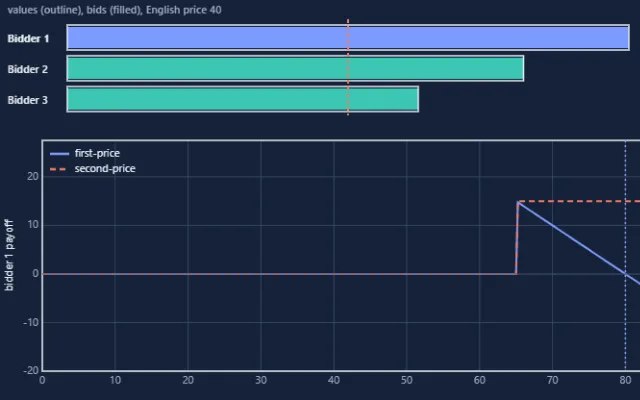
Enter hypothetical bidder values and bids, compare who wins and what they pay under first-price, second-price, English and Dutch auctions, and test revenue equivalence over many random auctions.
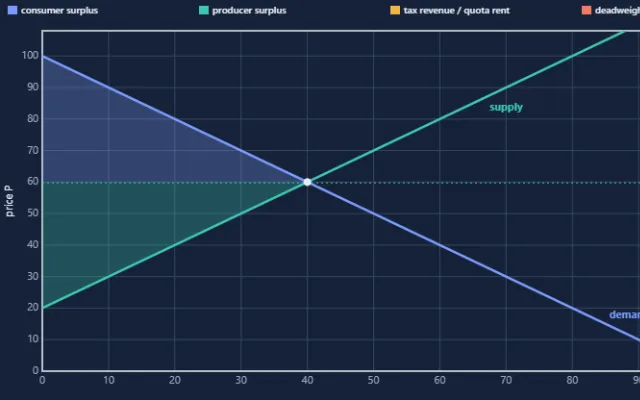
Shift linear supply and demand curves, add a tax, price ceiling, price floor or quota, and inspect the modelled equilibrium, consumer and producer surplus, and deadweight loss.
Operations & Economics · Markets & Auctions
Class 11–12 · College & beyondClass 12 Economics: Introductory Microeconomics (demand, supply, market equilibrium)
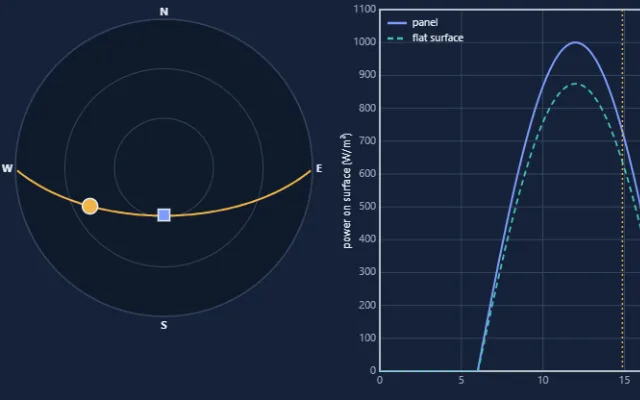
Change latitude, date, time of day, panel tilt and orientation, and see the sun's path across the sky, the angle at which sunlight strikes the panel, and idealized daily energy.
Engineering · Energy Systems
Class 6–8 · Class 11–12Class 6 Social Science: Earth's motions and seasons; Class 11 Geography: Solar Radiation, Heat Balance and Temperature
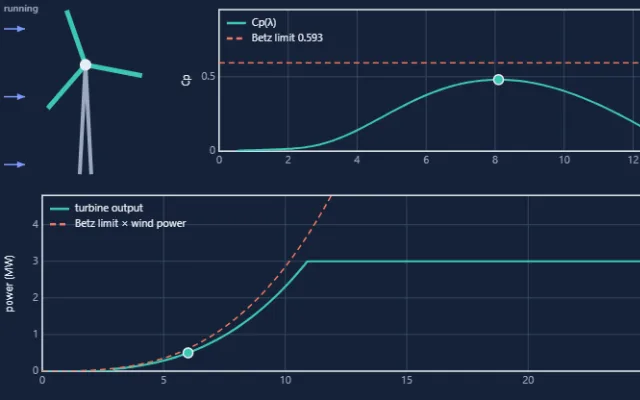
Change wind speed, rotor size, air density and rotor control, and inspect a bounded power model with the cube law, the Betz limit, tip-speed ratio and a rated-power cap.
Engineering · Energy Systems
Class 9–10 · College & beyondBuilds on Class 9 Science: Work and Energy (kinetic energy)
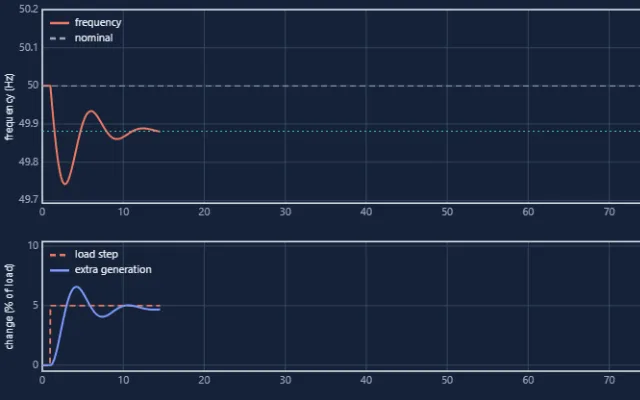
Trip a power station or add load, and watch a simplified grid's frequency fall and recover through inertia, governor droop and automatic generation control.
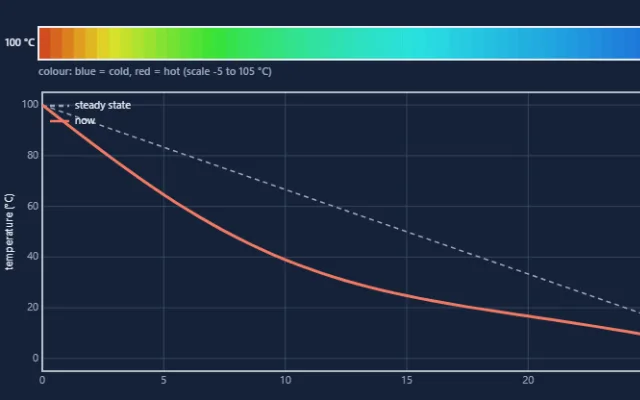
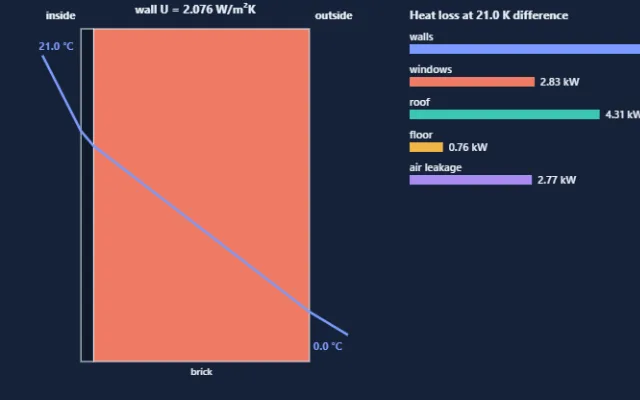
Choose wall and roof insulation, glazing and air-tightness for a two-storey house, set the weather, and compare U-values, the temperature profile through the wall, and idealized heat loss.
Engineering · Energy Systems
Class 11–12 · College & beyondClass 11 Physics: Thermal Properties of Matter (conduction)
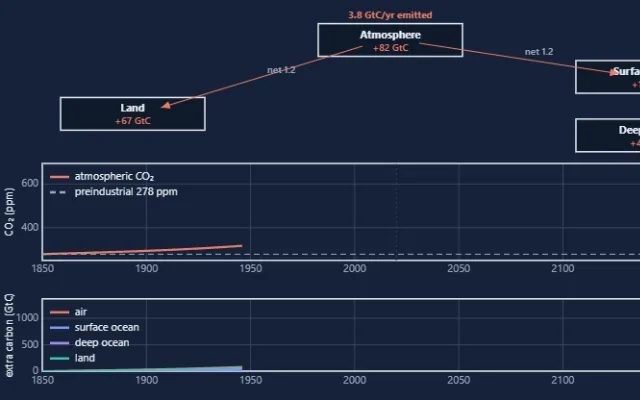
Run a four-reservoir carbon cycle box model from 1850 to 2200, change future emissions and exchange rates, and track atmospheric CO₂ and where the emitted carbon goes.
Earth & Environment · Climate & Carbon
Class 11–12 · College & beyondClass 11 Geography: World Climate and Climate Change
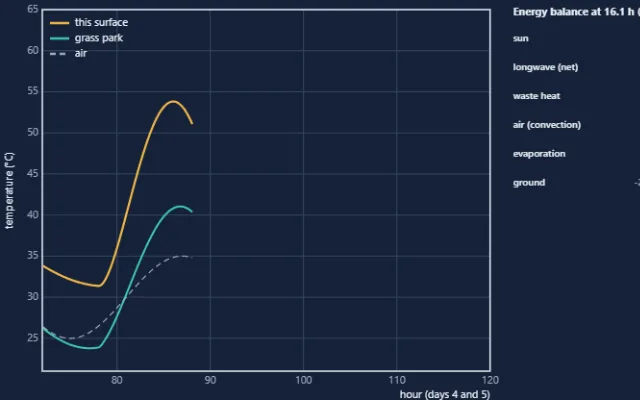
Change a city surface's colour, shade, vegetation and heat storage, and compare an illustrative surface energy balance and day–night temperatures with a grass park.
Earth & Environment · Climate & Carbon
Class 11–12 · College & beyondClass 11 Geography: Solar Radiation, Heat Balance and Temperature
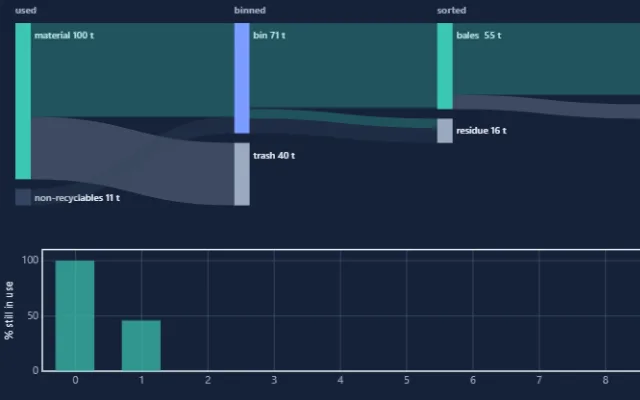
Follow 100 tonnes of packaging through collection, sorting and reprocessing, change collection, contamination, sorting accuracy and purity limits, and track how much becomes new material over repeated cycles.
Earth & Environment · Resources & Waste
Class 6–8 · Class 9–10Class 10 Science: Our Environment (managing waste)
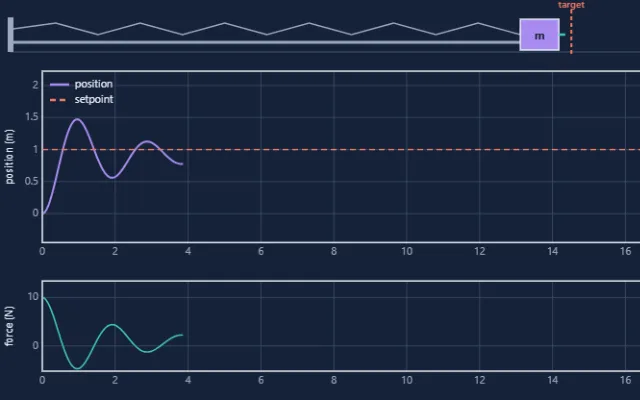
Tune proportional, integral and derivative gains on a mass–spring–damper, add a disturbance and actuator limits, and inspect overshoot, settling time and steady-state error.
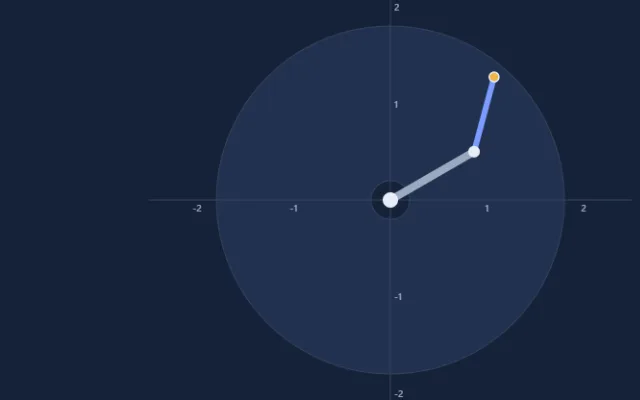
Set joint angles or drag a target for a two-link planar robot arm, and inspect forward and inverse kinematics, elbow-up and elbow-down solutions, reachability, and joint versus straight-line motion.
Engineering · Control Systems
Class 11–12 · College & beyondBuilds on Class 11 Maths: Trigonometric Functions
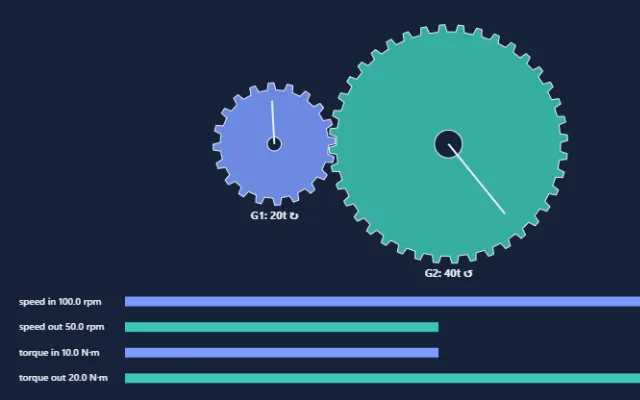
Change tooth counts in simple and compound gear trains, and inspect rotation direction, speed ratio and ideal output torque with animated meshing gears.
Engineering · Structures & Mechanisms
Class 6–8 · College & beyondBuilds on Class 6–8 Maths: ratio and proportion
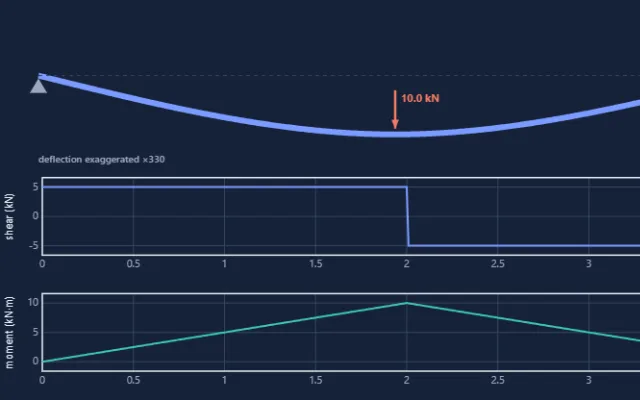
Load a simply supported or cantilever beam with point and distributed loads, change span, material and cross-section, and inspect deflection, bending moment, shear and stress in the small-deflection Euler–Bernoulli model.
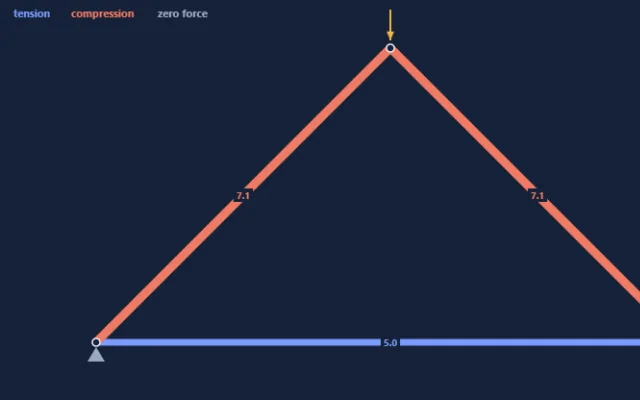
Load stable truss presets (A-frame, Pratt, Howe and Warren), change span, height and loads, and visualize tension and compression in every member found by the method of joints.
Engineering · Structures & Mechanisms
Class 11–12 · College & beyondBuilds on Class 11 Physics: Laws of Motion (equilibrium of forces)
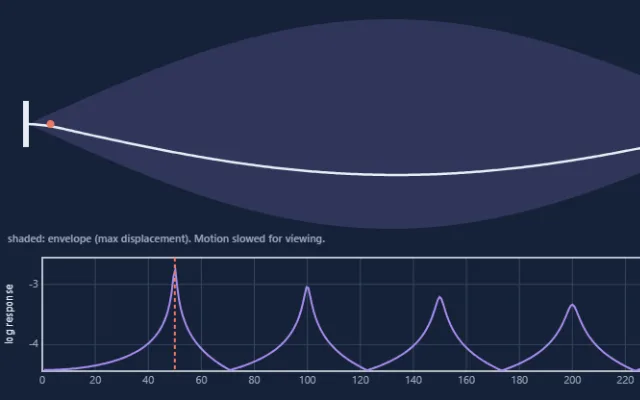
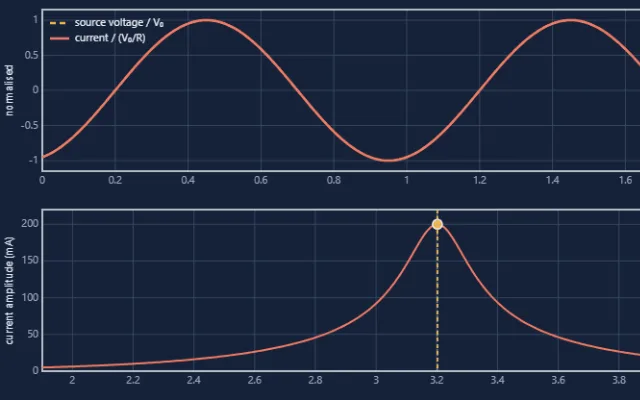
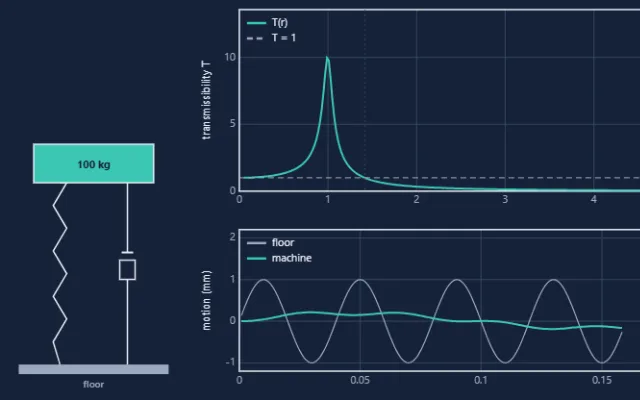
Mount a machine on springs and dampers over a shaking floor, change mass, stiffness, damping and excitation frequency, and compare transmissibility and resonance.
Engineering · Structures & Mechanisms
Class 11–12 · College & beyondClass 11 Physics: Oscillations (forced oscillations, resonance)
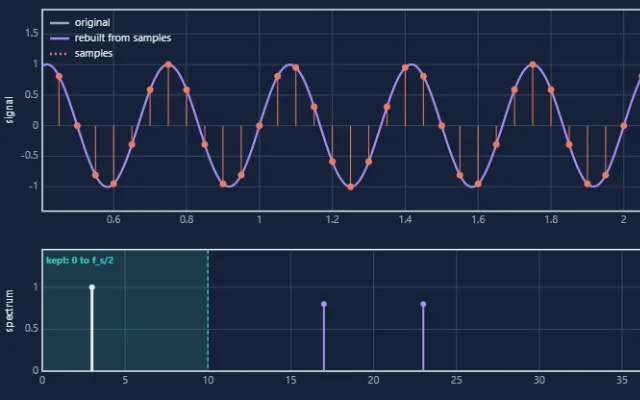
Change a signal's frequency and the sampling rate, observe aliasing, compare sinc and staircase reconstruction, and see how quantization bits limit precision.
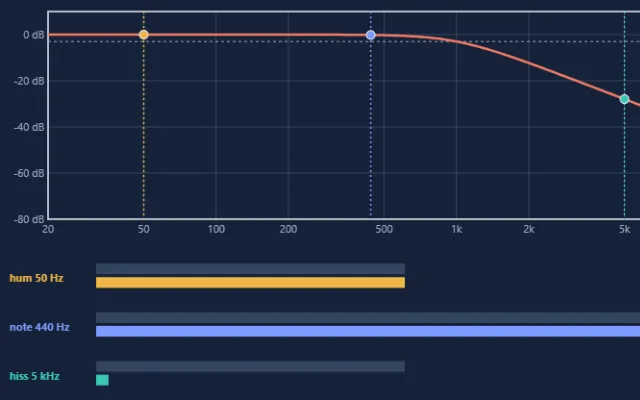
Adjust low-pass, high-pass, band-pass and notch filters, inspect their frequency response on a decibel scale, see what they do to hum, a tone and hiss, and optionally listen to the result.
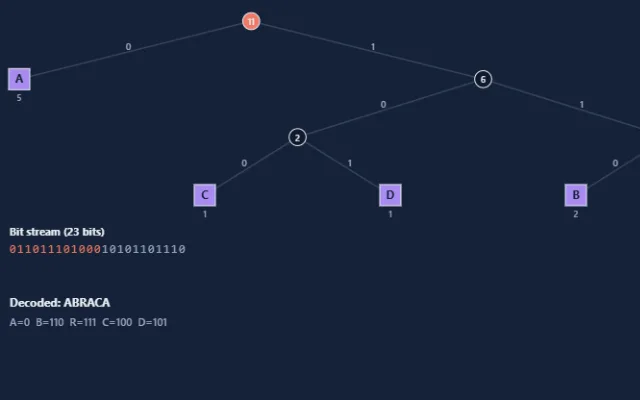
Edit sample text, build its Huffman code tree, compare bit counts with plain and fixed-length codes and the entropy limit, and watch the bits decode one by one.